How to choose your MTB cables and housing?

Worn cabling is often the primary reason for a malfunction in MTB transmission or in V-brake or mechanical disc brakes.
Types of cables and housing
Reminder: Cables and housing for brakes and MTB derailleurs are not the same. They differ in head shape and diameter, so they are not interchangeable.
The cable can be made of steel or stainless steel: the former is less expensive, whilst the latter has a longer service life as it is more resistant to corrosion. Furthermore, to reduce friction and therefore improve the performance of your equipment, it can be coated with a layer of polymer A (commonly referred to as PTFE or Teflon®).
The cable housing may also feature waterproof end caps B to improve longevity and/or an additional liner C to further reduce friction with the cable.


Which cables and housing for my riding style?
You already know this, but we want to stress it: you cannot use a derailleur cable or housing on a braking system, or vice versa. Since the dimensions and diameters are different, you will not be able to fit them.
The choice will depend on your usage. For occasional use, a kit including a steel cable and standard housing will be more than sufficient.
A regular rider will opt for a steel or stainless steel cable with a polymer coating and housing with waterproof end caps for maximum reliability.
Finally, competitive riders will opt for polymer-coated cables and lined housing to optimise transmission performance.
Découvrez tous nos conseils & Tutoriels
MTB - Transmission Cables and Housing
-

CLARKS DIE DRAWN Polished Stainless Steel Derailleur Cable
Regular price 2,61 €Regular priceUnit price per -
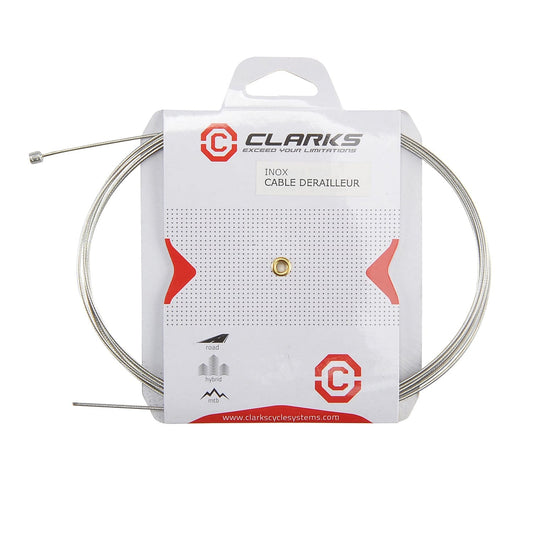
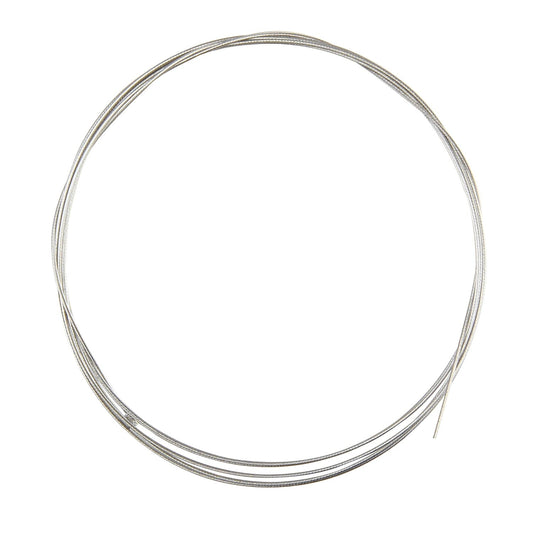
CLARKS UNIVERSAL Stainless Steel Derailleur Cable
Regular price 2,09 €Regular priceUnit price per -

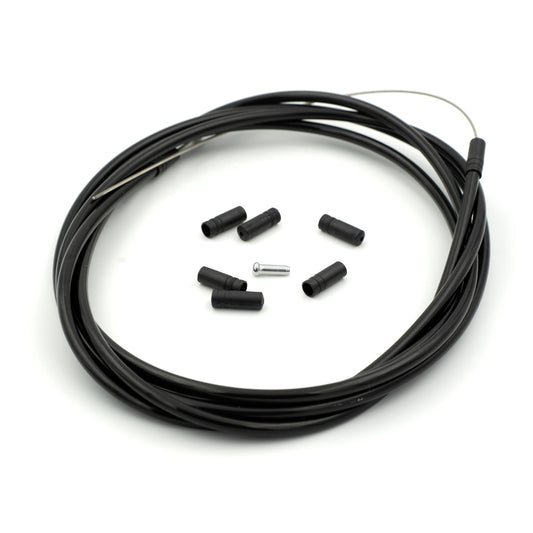
CLARKS Universal Stainless Steel Derailleur Cable and Housing Kit
Regular price 3,05 €Regular priceUnit price per -

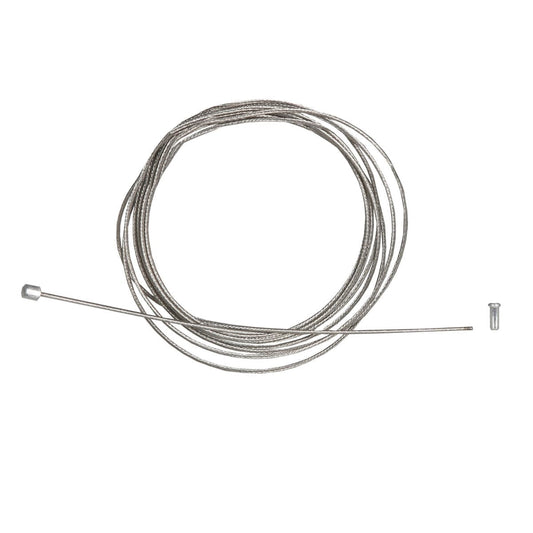
SHIMANO Stainless Steel Derailleur Cable 2100mm
Regular price 7,34 €Regular priceUnit price per -
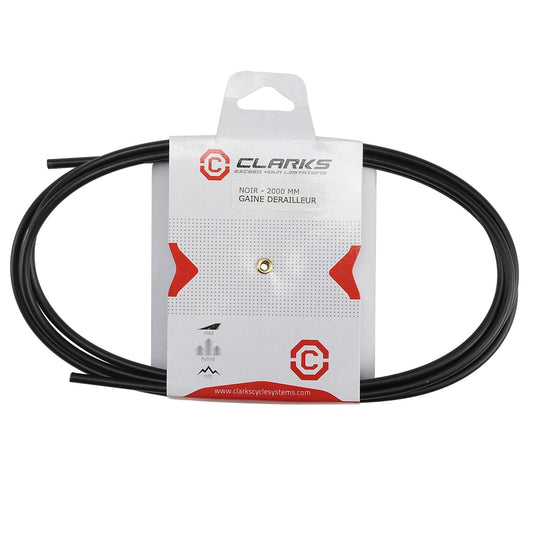
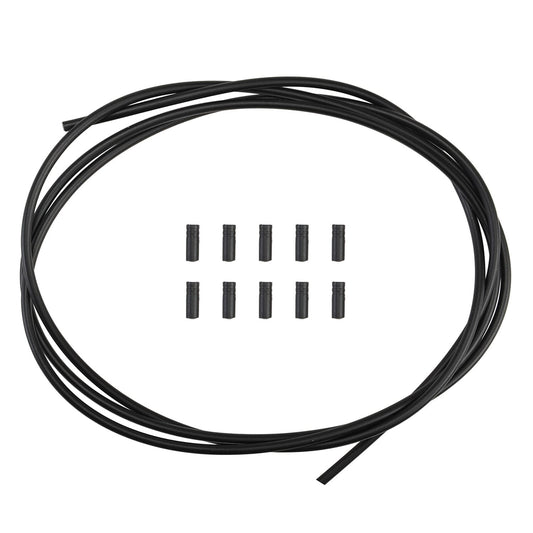
CLARKS 2000mm Derailleur Housing
Regular price 2,61 €Regular priceUnit price per -
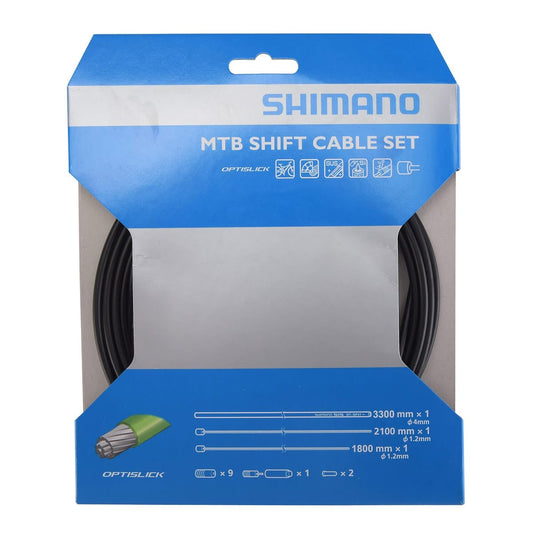
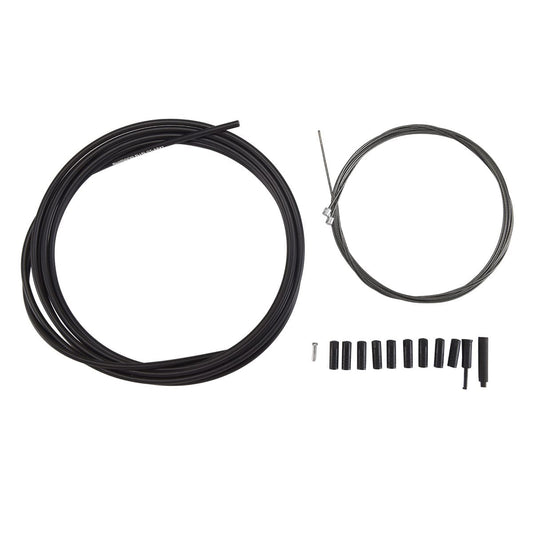
SHIMANO MTB Optislick Derailleur Cable and Housing Kit
Regular price 25,19 €Regular priceUnit price per -
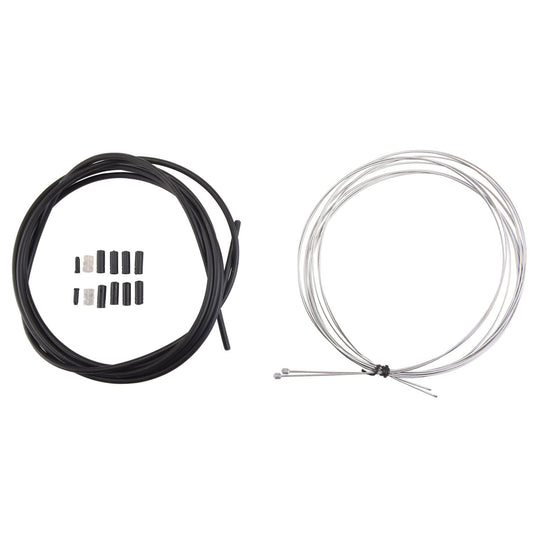
CLARKS Stainless Steel Derailleur Cable and Housing Kit Black
Regular price 10,49 €Regular priceUnit price per