


How to choose your road bike crankset?
Triple, double, compact crankset, Hollowtech II axle, GXP or BB30 — it's easy to get lost among all these crankset standards. Here's what you need to know.
The standards
- The axle type: Hollowtech, GXP, BB30, etc.
- The number of chainrings: 1, 2 or 3
- Speed compatibility: currently 10 or 11
- Crank length: 165; 170; 172.5 or 175 mm
- The chainring teeth
The types of cranksets
The first element to consider when choosing a crankset is the bottom bracket shell of your frame. Indeed, depending on the brand, different axle standards exist. To help you identify what you need, here is a list of the most common ones:
In the case where the bottom bracket axle is part of the bottom bracket:
- ISO Square Taper: tapered square 12.5 mm axle tip
In the case where the bottom bracket axle is part of the crankset, also known as a through axle:
- Hollowtech II, Megaexo: 24 mm diameter axle
- GXP: 22 mm diameter axle on the left, 24 mm on the right
- Power-Torque: 1-piece 25 mm diameter axle
- Ultra-torque: 2-piece 25 mm diameter axle
- BB30: 30 mm diameter axle
Please note that some road bikes have an extended bottom bracket shell requiring a specific crankset, such as the 386EVO system which is an extended BB30.
Regarding the number of chainrings, the current trend is to reduce the number of chainrings at the front and increase the number of gears at the rear. Indeed, by reducing the number of chainrings at the front, duplicate gears are eliminated and the lifespan of the drivetrain is improved. The Triple is generally 30/39/50, the Compact 34/50 (110 mm bolt circle diameter allowing a smaller chainring than 38 teeth to be fitted) and the Double 39/53 (130 or 135 mm bolt circle diameter for better rigidity above 38 teeth). On new-generation 4-arm cranksets, the bolt circle diameter is the same for the Double and the Compact for better cross-compatibility: 110 mm. Mid-Compact models are also available, featuring a small 36-tooth chainring and a large 52-tooth chainring, all on a 110 mm bolt circle diameter. To date, the most widely used drivetrain is a Compact 34/50 with 11 speeds.
Like the rest of the drivetrain, the crankset is designed to work under a speed standard, so you cannot pair a 10-speed crankset with an 11-speed drivetrain, for example.
Once you have determined the model you need, you will have the choice of crank length between 165, 170, 172.5 and 175 mm. In theory, since the leverage is greater with longer cranks, you will have to exert less force; conversely, if they are shorter you will cover less distance per pedal revolution, thus making it easier to increase your cadence. However, this effect is not easy to notice for an amateur. What is true, on the other hand, is that it is important to have a crank length proportional to the length of your legs.
Regarding crankset chainring teeth, it works the opposite way to cassettes: the fewer teeth a chainring has, the more the effort required to turn the wheel is multiplied. Ideal for climbing mountain passes!
Which crankset for my riding style?
When replacing a crankset, you won't necessarily have much choice beyond quality and chainring teeth count. Indeed, the choice will depend on the bottom bracket type (axle compatibility) and the number of chainring(s)/speeds dictated by the gear shifters and derailleurs.
If you are simply looking to get some fresh air, a Triple chainring drivetrain will give you maximum versatility and flexibility across all types of rides, regardless of the number of gears at the rear.
For a good compromise between leisure and performance, a Compact typically in 34/50 with 11 speeds will simplify your drivetrain to keep only the essentials, while maintaining a gear range close to what can be found with a Triple by opting for an 11-32 cassette, for example.
Performance above all is the essence of a Double drivetrain in 39/53 with an 11-speed cassette whose gear steps will depend on the ride profile, but an 11-28 will cover everything for a racer.
In Time Trial / Triathlon there are 2 schools of thought. Either a single-chainring drivetrain — simple, reliable and terrifically effective for this discipline — but requiring careful selection of chainring teeth based on the race profile. Or a Double setup but with a shorter cassette such as an 11-25, for a compromise between pure performance and versatility.
For crank length, the calculation can be summarised as follows:
- Inseam under 81 cm: 165 mm cranks
- Inseam between 81 and 83.5 cm: 170 mm cranks
- Inseam between 83.5 and 86 cm: 172.5 mm cranks
- Inseam over 86 cm: 175 mm cranks
However, for the same inseam length, shorter cranks will allow you to increase your cadence more easily. Longer cranks will make it easier to push bigger gears.
Découvrez tous nos conseils & Tutoriels
ROAD - Cranksets and Cranks
-
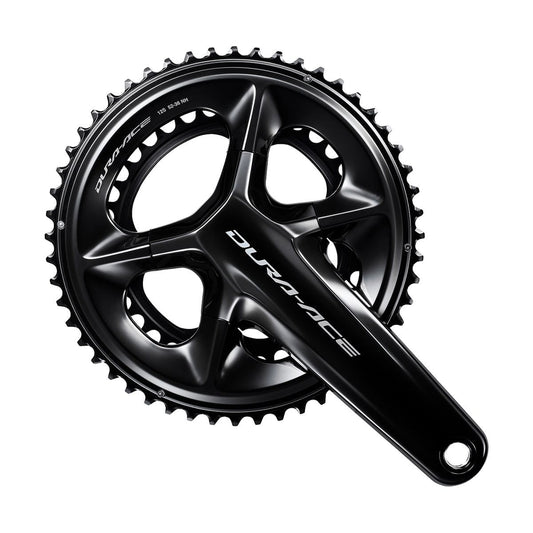
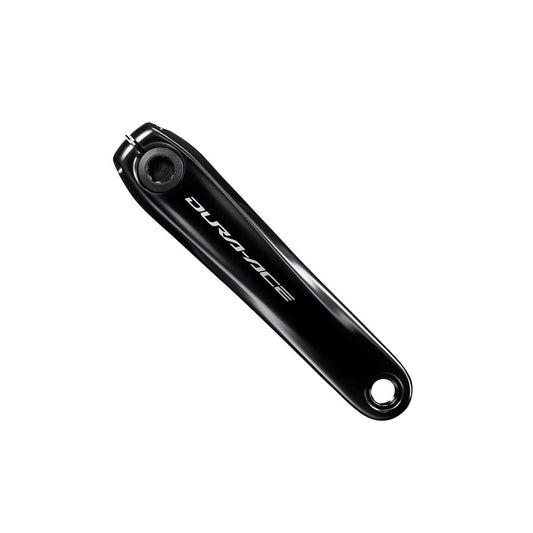
SHIMANO DURA-ACE R9200 12-Speed Crankset
Regular price From 451,40 €Regular priceUnit price per -

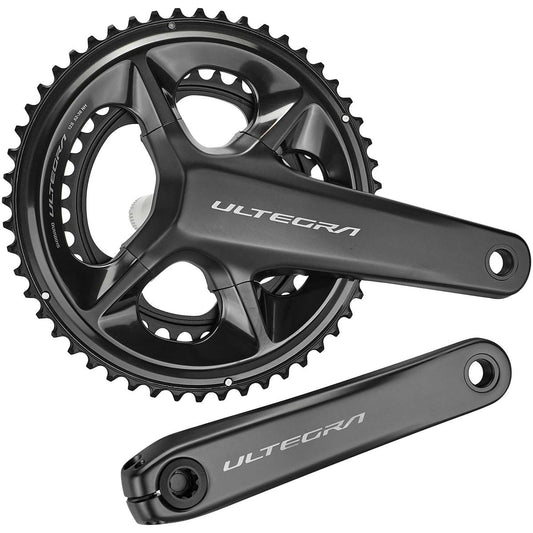
SHIMANO ULTEGRA R8100 12 Speed crankset
Regular price From 178,40 €Regular priceUnit price per -
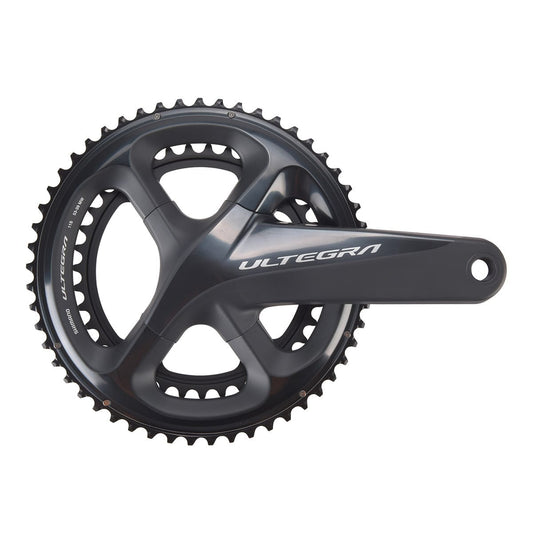
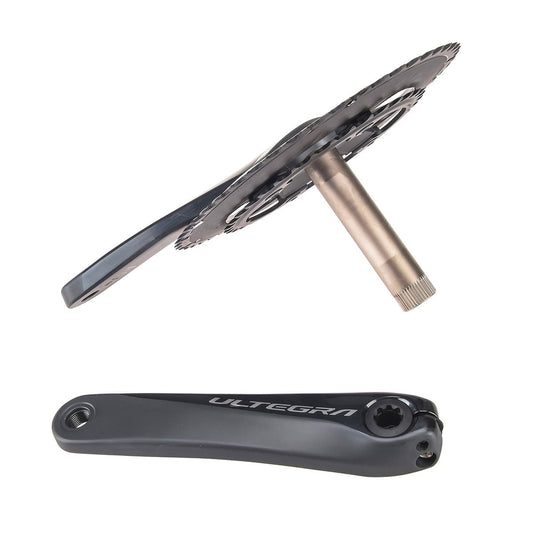
SHIMANO ULTEGRA R8000 11-Speed Crankset
Regular price 262,40 €Regular priceUnit price per -
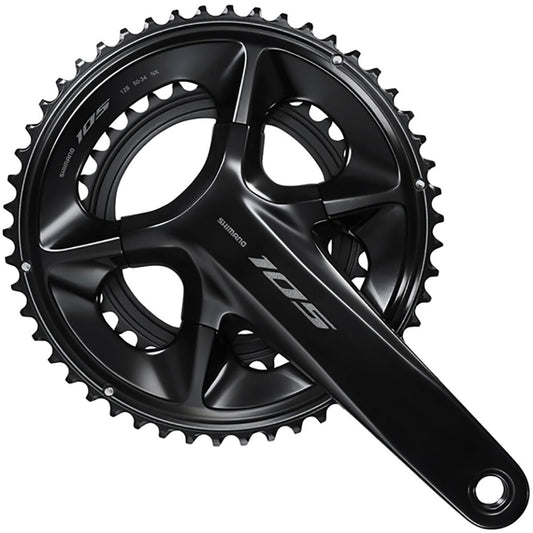
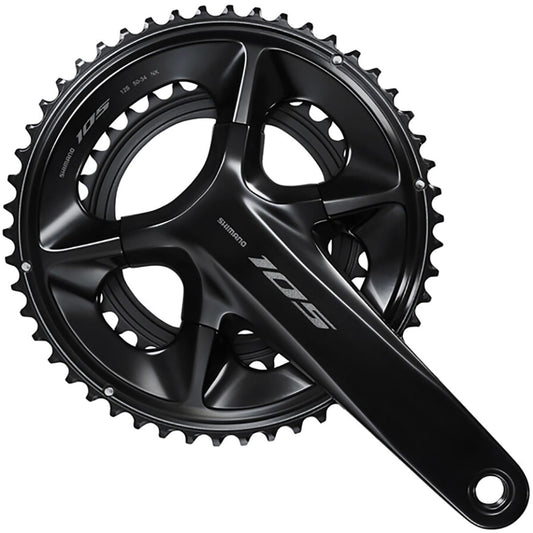
SHIMANO 105 R7100 12-Speed Crankset
Regular price From 146,90 €Regular priceUnit price per -
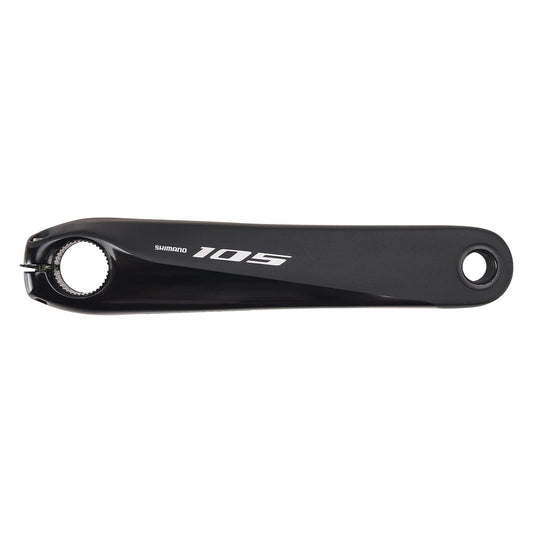
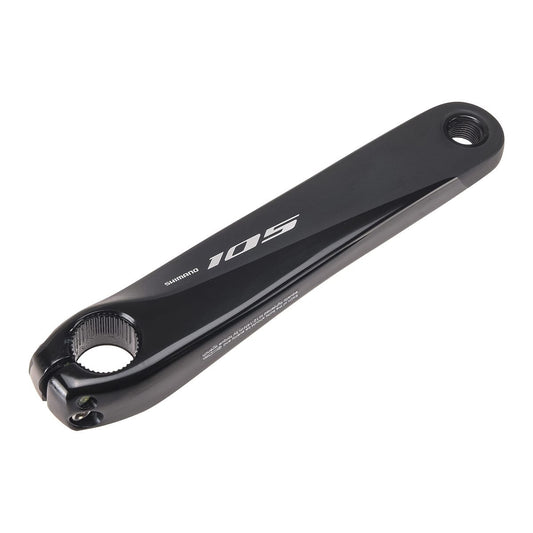
SHIMANO 105 R7000 Left Crank Arm
Regular price 62,99 €Regular priceUnit price per -
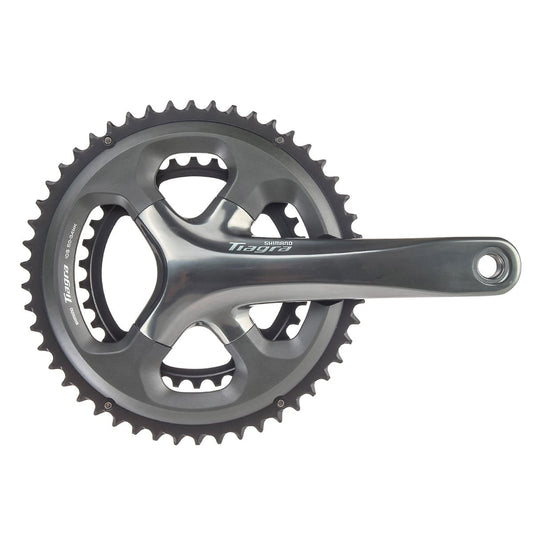
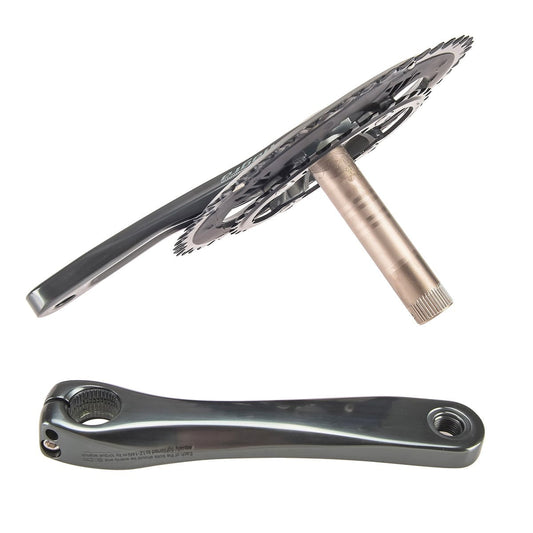
SHIMANO TIAGRA 4700 10-Speed Crankset
Regular price From 115,40 €Regular priceUnit price per -
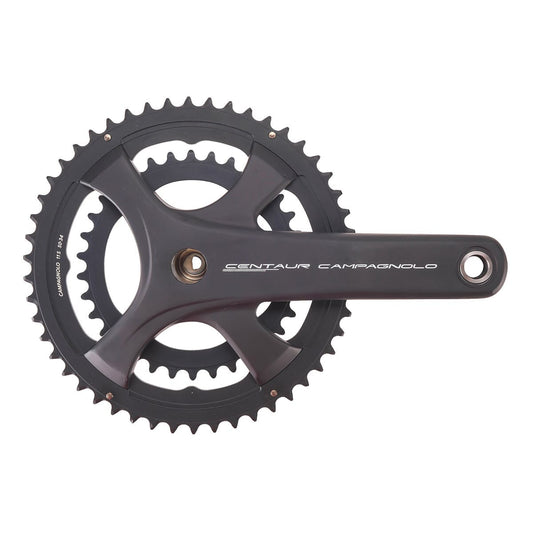
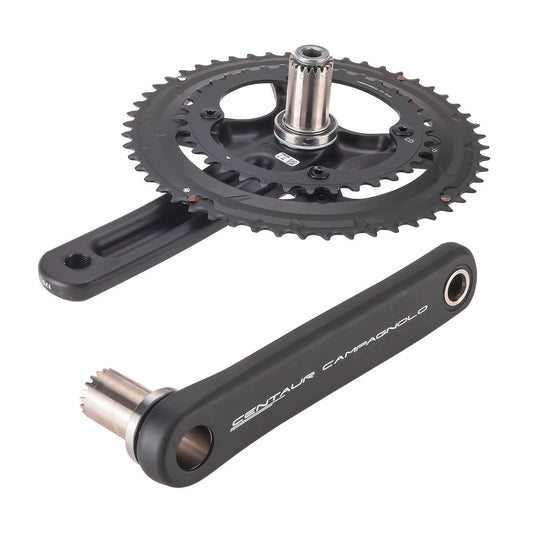
CAMPAGNOLO CENTAUR ULTRA-TORQUE 11V Crankset
Regular price 173,15 €Regular priceUnit price per -

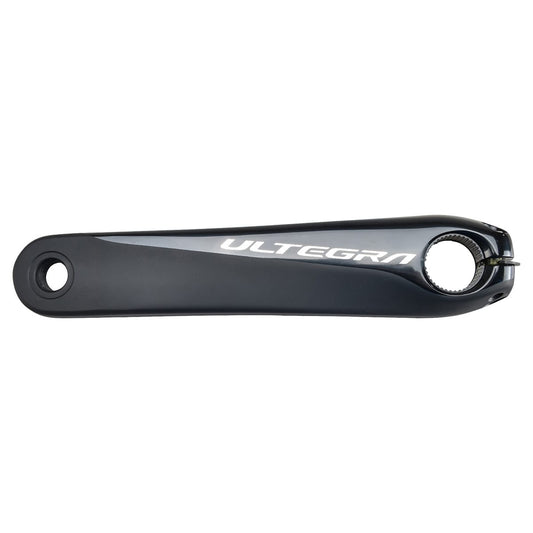
SHIMANO ULTEGRA R8000 Left Crank Arm
Regular price From 68,24 €Regular priceUnit price per


